Tooth extraction is a common dental procedure used to remove a tooth that cannot be predictably saved or needs to be removed for another clinical reason. Although dentists generally aim to preserve natural teeth whenever possible, extraction may be recommended when a tooth is severely decayed, significantly damaged, affected by certain infections, compromised by advanced gum disease, or impacted.
If your dentist has recommended a tooth extraction, you may have questions about what the procedure involves, whether it will hurt, how long it takes, what recovery is like, and what you should do afterward.
This guide explains what tooth extraction is, when it may be necessary, what happens during the procedure, whether tooth extraction is painful, how recovery works, and how to care for the extraction site. It also explains possible complications, tooth replacement options, and when you should contact a dentist.
If you are considering tooth extraction in Lalitpur, a dental examination can help determine whether extraction is appropriate or whether the natural tooth may be preserved with another treatment. Dynamic Dental Clinic in Lalitpur can assess your dental condition and discuss treatment options based on your individual needs.
What Is Tooth Extraction?
Tooth extraction is the removal of a tooth from its socket in the jawbone. Dentists generally try to preserve natural teeth whenever possible through treatments such as fillings, Root Canal Treatment, crowns, or other restorative procedures.
Extraction may be considered when a tooth is too damaged, decayed, infected, or otherwise compromised to be restored predictably. It may also be recommended for other clinical reasons, such as an impacted wisdom tooth or an orthodontic treatment plan that requires additional space.
The type of extraction depends on the condition and position of the tooth. Extractions are generally classified as simple extraction or surgical extraction.
When Is Tooth Extraction Necessary?
A dentist may recommend tooth extraction for several different reasons. However, extraction is not automatically the best solution for every painful, broken, or damaged tooth. Your dentist should assess whether the tooth can be treated and preserved before recommending removal when appropriate.
Common reasons may include:
- Severe tooth decay: Extensive decay may destroy so much tooth structure that a filling, crown, or other restoration is no longer likely to provide a predictable result.
- Advanced gum disease: Severe periodontal disease can damage the tissues and bone supporting a tooth, sometimes leaving the tooth too loose or compromised to retain. Depending on the condition, periodontal treatments such as Flap Surgery may also be considered.
- Dental infection or abscess: Depending on the condition of the tooth, treatment may include Root Canal Treatment. If the tooth cannot be predictably saved, extraction may be recommended.
- Severely broken or damaged teeth: Trauma, fractures, or extensive structural damage may leave insufficient healthy tooth structure for successful restoration.
- Impacted wisdom teeth: A wisdom tooth that does not have enough room to erupt properly may cause pain, inflammation, infection, or other dental problems.
- Orthodontic treatment requirements: In some orthodontic treatment plans, removing a tooth may create the space needed to achieve the planned tooth movement. If extraction is being considered as part of orthodontic planning, your dentist or orthodontic provider can assess whether it is appropriate. You can also learn more about Orthodontics & Braces.
- A tooth that cannot be restored: Extraction may be considered when restorative treatment is unlikely to provide a predictable long-term outcome.
The appropriate treatment depends on the condition of the tooth, surrounding tissues, your overall oral health, and the findings of a dental examination. Dental X-rays or other imaging may also be required.
Types of Tooth Extraction
The type of extraction depends on the tooth's position, condition, and complexity of removal.
Simple Tooth Extraction
A simple extraction is generally performed when the tooth is visible and accessible above the gumline.
After local anesthesia is administered, the dentist uses appropriate dental instruments to loosen the tooth from the surrounding tissues before removing it.
Simple extractions are generally less complex than surgical extractions, although the exact procedure and recovery can vary depending on the individual tooth and patient.
Surgical Tooth Extraction
A surgical extraction may be required when a tooth has not fully erupted, has broken below the gumline, or cannot be removed easily using a simple extraction technique.
Depending on the situation, the dentist may need to make a small incision in the gum, remove a limited amount of bone, or divide the tooth into sections before removing it.
The complexity of the procedure can affect treatment time and recovery.
Wisdom Tooth Extraction
Wisdom tooth extraction is a common reason for tooth removal. Depending on how the wisdom tooth has erupted and its position in the jaw, the procedure may be either simple or surgical.
An impacted wisdom tooth may be partially or completely trapped beneath the gum or bone and may require a surgical approach.
Your dentist can use an examination and appropriate imaging to assess the position of a wisdom tooth and determine whether removal is necessary.
What Happens During a Tooth Extraction Procedure?
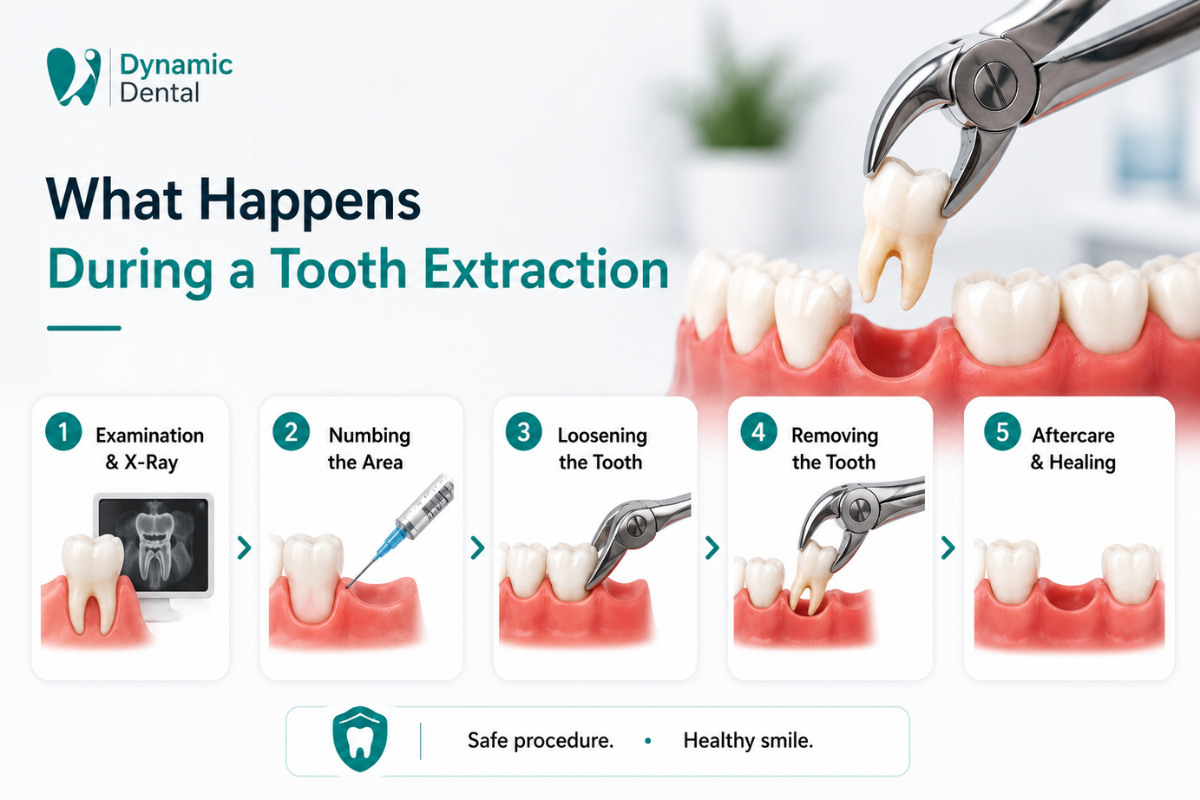
Knowing what to expect can make the procedure feel less uncertain. The exact steps vary depending on the tooth and type of extraction, but a typical procedure may involve the following.
Dental Examination and Assessment
Your dentist first examines the tooth and surrounding tissues. The dentist will assess the condition of the tooth and determine whether it can be treated or whether extraction is an appropriate option.
Your dental history and symptoms may also be considered when planning treatment.
X-Rays and Treatment Planning
Dental X-rays may be taken when necessary to evaluate the tooth's roots, position, surrounding bone, and nearby structures.
Imaging can be particularly useful when planning a surgical extraction or evaluating an impacted wisdom tooth.
Local Anaesthesia
Local anesthesia is typically used to numb the area around the tooth.
You may remain awake during the procedure. Although you should generally not feel sharp pain while the area is adequately numb, you may notice pressure, pushing, or movement.
If you experience sharp pain during the procedure, tell your dentist so the area can be assessed and additional anesthesia can be provided if appropriate.
Tooth Removal
For a simple extraction, the dentist uses dental instruments to loosen and remove the tooth.
For a surgical extraction, additional steps may be required, such as making an incision, removing a small amount of bone, or dividing the tooth into sections.
The exact approach depends on the tooth and its position.
Controlling Bleeding
After the tooth has been removed, gauze is generally placed over the extraction site. You may be asked to bite down gently on the gauze to help control bleeding and support the formation of a blood clot.
Post-Treatment Instructions
Before leaving the clinic, your dentist will provide instructions about caring for the extraction site.
These instructions may cover oral hygiene, food choices, physical activity, medication, bleeding, and signs that require further dental attention.
Does Tooth Extraction Hurt?
Pain is one of the most common concerns patients have before an extraction.
During the procedure, local anesthesia is typically used to reduce discomfort. You should generally not feel sharp pain while the area is adequately numb, although pressure, pushing, or movement may be noticeable.
Some soreness or discomfort is common after the anesthesia wears off. Depending on your individual circumstances, your dentist may recommend an appropriate pain-relief option.
The amount of discomfort can vary between patients. Simple extractions may involve less post-procedure discomfort than more complex surgical extractions, although this is not the same for everyone.
Factors such as the position of the tooth, complexity of the procedure, individual healing response, and adherence to aftercare instructions can affect the recovery experience.
How Long Does Tooth Extraction Take?
The time required for a tooth extraction varies depending on the tooth and the complexity of the procedure.
A simple extraction may be relatively quick, while a surgical extraction may require additional steps and therefore take longer.
Your dentist can provide a more useful estimate after examining the tooth and determining the appropriate extraction technique.
Factors That Can Affect Treatment Time
Treatment time can be influenced by:
- Tooth position
- Root shape and structure
- Type of extraction
- Whether the tooth is impacted
- Whether the tooth has broken below the gumline
- Complexity of the procedure
- Surrounding oral health conditions
- Whether additional treatment is required
Tooth Extraction Recovery and Aftercare
Proper aftercare is an important part of recovery. Your dentist will provide instructions based on the type of extraction and your individual circumstances.
What to Expect After Tooth Extraction
Some symptoms are common during the first few hours and days after extraction.
Pain or discomfort: Mild to moderate soreness can occur as the local anesthesia wears off.
Bleeding or oozing: Some light bleeding or oozing is common during the early healing period and should generally decrease when appropriate pressure is applied as instructed by your dentist.
Swelling: Swelling can occur after extraction and may become more noticeable during the first couple of days before gradually improving.
Tenderness: The gums and surrounding tissues may remain tender for several days.
Blood clot formation: A blood clot forms inside the extraction socket and helps protect the underlying tissues while healing begins. Protecting this clot is particularly important during the early recovery period.
What to Do After Tooth Extraction
Protect the Blood Clot
Follow your dentist's instructions regarding gauze after the extraction. Avoid disturbing the extraction site with your tongue, fingers, toothbrush, or other objects.
The blood clot plays an important role in the early healing process.
Keep Your Mouth Clean
Continue brushing your other teeth carefully while avoiding direct irritation of the extraction site.
Your dentist may recommend gentle salt-water rinsing after the first 24 hours. Avoid vigorous rinsing or forceful spitting unless your dentist specifically advises otherwise.
Take Medications as Directed
If your dentist recommends pain medication, antibiotics, or another medication, use it exactly as directed.
Do not change the dose or stop a prescribed medication without appropriate professional advice.
Rest and Limit Strenuous Activity
Rest on the day of the extraction and avoid strenuous physical activity during the early recovery period.
Your dentist may recommend a longer period of reduced activity depending on the complexity of the procedure.
What Can You Eat After Tooth Extraction?
Soft, cool, or lukewarm foods are generally easier to tolerate during the first day or two.
Depending on your dentist's instructions, suitable options may include:
- Yogurt
- Mashed potatoes
- Soft vegetables
- Soft rice
- Oatmeal
- Scrambled eggs
- Soft pasta
- Smooth foods requiring little chewing
- Soup that has been allowed to cool to a comfortable temperature
Avoid foods that are hard, sharp, very hot, or difficult to chew while the extraction area is tender.
As your comfort improves, you can gradually return to your normal diet while following your dentist's recommendations.
What Should You Avoid After Tooth Extraction?
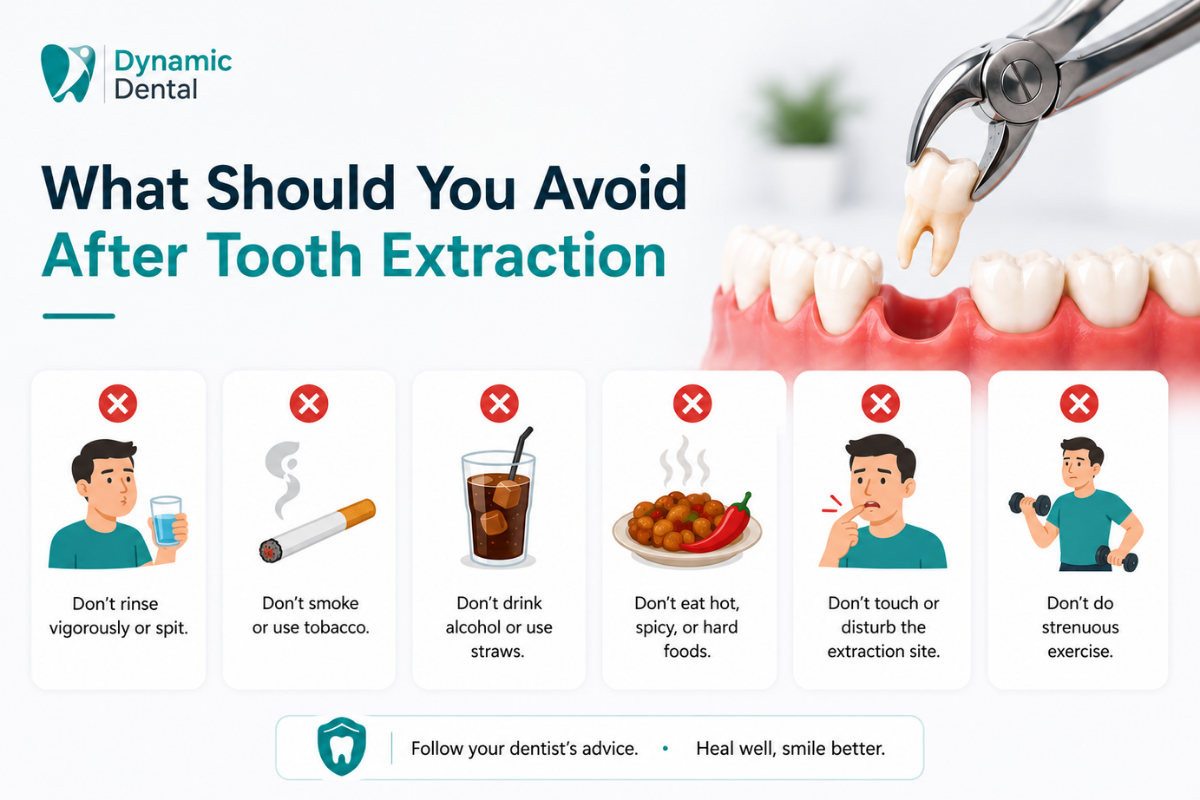
Several activities can interfere with early healing or disturb the blood clot.
Smoking and Tobacco Use
Avoid smoking and tobacco use during the initial healing period. Tobacco can interfere with healing and may increase the risk of complications such as dry socket.
Follow your dentist's specific instructions about when it is appropriate to resume tobacco use.
Using Straws
Your dentist may advise avoiding straws during early healing because suction may disturb the blood clot.
Vigorous Rinsing or Spitting
Avoid forceful rinsing or spitting immediately after extraction because these actions may disturb the developing blood clot.
Strenuous Physical Activity
Avoid strenuous exercise during the first day or two, or for as long as your dentist recommends.
Physical exertion may increase bleeding or discomfort in some people.
Hard, Hot, Crunchy, or Spicy Foods
These foods may irritate the extraction site or make eating uncomfortable during early healing.
Disturbing the Extraction Site
Avoid touching the extraction socket with your tongue, fingers, toothbrush, or other objects.
Tooth Extraction Recovery Timeline
Recovery varies depending on the type and complexity of the extraction and your individual healing response.
First 24 Hours
A blood clot forms in the extraction socket. Mild bleeding or oozing, soreness, and some swelling can occur.
Follow your dentist's instructions regarding gauze, food, oral hygiene, medication, and rest.
Days 2–3
Swelling and discomfort may still be noticeable and can sometimes be more pronounced during this period.
Continue protecting the extraction site and following your aftercare instructions.
Days 4��7
Pain and swelling should generally begin improving as healing progresses.
Continue keeping your mouth clean and avoid activities that could disturb the healing area.
After the First Week
The gum tissue continues to heal, although the extraction site may not be completely healed yet.
Your dentist may recommend a follow-up appointment depending on the type of extraction and your individual circumstances.
Following Weeks
Soft-tissue healing continues while deeper bone remodeling takes longer.
If you plan to replace the missing tooth, your dentist can advise you about appropriate timing based on the condition of the extraction site and your overall treatment plan.
How Long Does It Take to Recover From a Tooth Extraction?
Recovery time varies from person to person.
The extraction area often shows substantial soft-tissue healing within one to two weeks, although deeper bone remodeling continues for longer.
Recovery may take longer after a surgical extraction or wisdom tooth removal than after a straightforward simple extraction.
Factors that can affect recovery include:
- Type of extraction
- Location and condition of the tooth
- Complexity of the procedure
- Oral health
- Aftercare
- Individual healing response
Your dentist can give you more specific guidance based on the procedure performed.
Possible Risks and When to Contact a Dentist
Most tooth extractions heal without serious complications, but problems can occasionally occur.
Contact your treating dentist if symptoms become severe, persist longer than expected, or worsen instead of improving.
Dry Socket
Dry socket can occur when the protective blood clot is lost or breaks down before the extraction site has adequately healed.
It can cause significant pain, often developing or becoming more noticeable a few days after the extraction.
Smoking or tobacco use can increase the risk of dry socket.
If you develop significant or worsening pain several days after the extraction, contact your dentist for evaluation.
Infection
An infection can develop at the extraction site.
Possible signs may include increasing pain, swelling, fever, chills, or unusual discharge.
Persistent or Heavy Bleeding
Some bleeding or oozing is common after an extraction.
However, bleeding that remains heavy or does not improve with the pressure recommended by your dentist should be evaluated promptly.
Prolonged Pain or Swelling
Pain and swelling should generally improve as healing progresses.
If symptoms become significantly worse rather than gradually improving, contact your dentist.
Nerve-Related Symptoms
Unusual numbness, tingling, or altered sensation can occasionally occur, particularly after some lower wisdom tooth procedures.
Contact your dentist if you experience persistent or concerning nerve-related symptoms.
When Should You See a Dentist After Tooth Extraction?
Contact your dentist promptly if you experience:
- Severe or worsening pain
- Heavy or persistent bleeding
- Increasing swelling
- Fever or chills
- Pus or unusual discharge
- Persistent or unusual numbness or tingling
- Symptoms that are not improving as expected
Difficulty breathing or swallowing requires urgent medical or dental attention. Do not wait for a routine appointment if these symptoms occur.
If you are experiencing a serious dental problem that requires urgent assessment, you can also learn more about Emergency Dental Care available through Dynamic Dental Clinic.
What Happens If You Don't Remove a Tooth That Needs Extraction?
If a tooth genuinely requires extraction and the underlying problem is left untreated, the dental condition may persist or worsen.
Depending on the cause, an untreated problem may contribute to continued pain, infection, damage to surrounding structures, or other oral health complications.
However, not every painful, broken, or damaged tooth automatically needs to be extracted.
Before removing a tooth, your dentist may assess whether it can be preserved with restorative treatment, root canal treatment, periodontal treatment, or another appropriate approach.
Tooth Extraction vs Root Canal Treatment
When a tooth is infected or badly damaged, both tooth extraction and root canal treatment may be considered depending on the clinical situation.
Root Canal Treatment is designed to remove infected or damaged pulp from inside the tooth while allowing the natural tooth to remain. A restoration such as a filling or crown may then be required depending on the tooth's condition.
Tooth extraction, on the other hand, removes the tooth from its socket.
Neither treatment is universally better for every patient. If a tooth has enough healthy structure and can be predictably restored, preserving the natural tooth may be possible. If the tooth is severely compromised and cannot be predictably saved, extraction may be recommended.
A proper examination and, when appropriate, dental imaging can help your dentist determine which treatment is suitable.
If you want to learn more about preserving an infected or damaged tooth, see Dynamic Dental Clinic's Root Canal Treatment service.
What Can Replace a Tooth After Extraction?
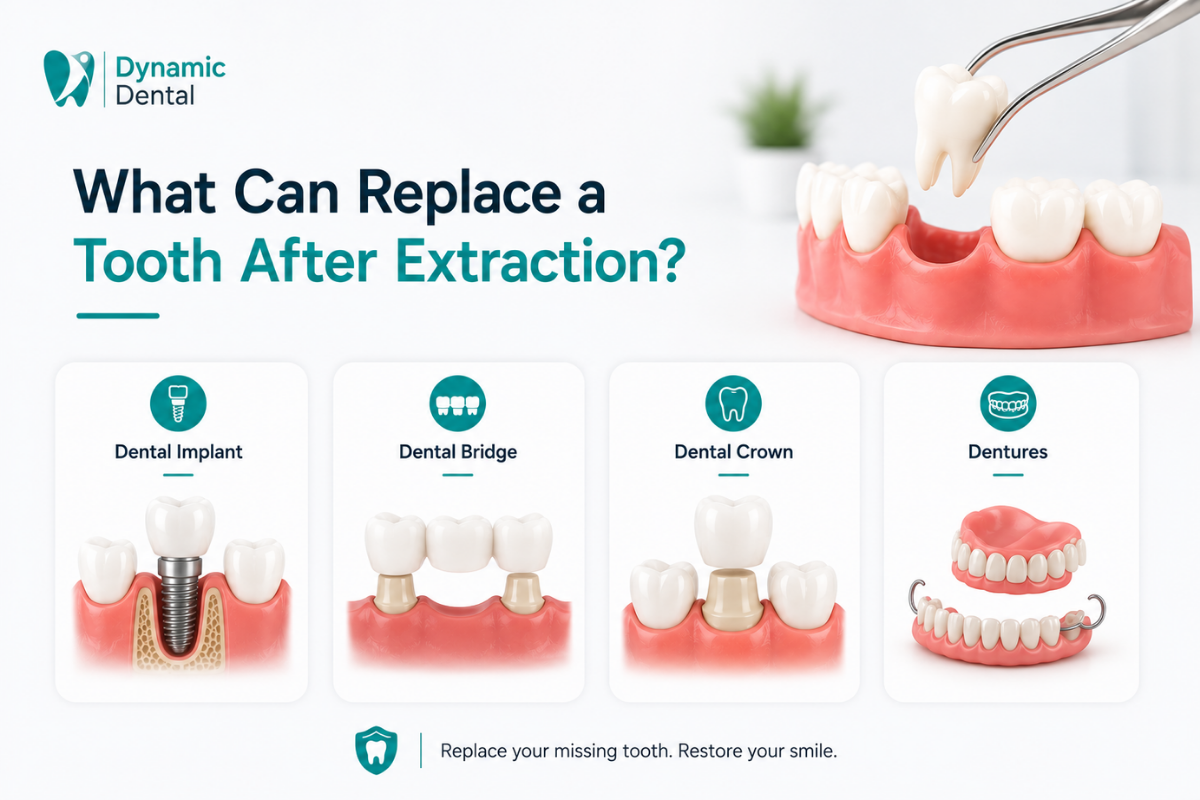
After a tooth is removed, your dentist may discuss whether replacement is appropriate and which option best fits your oral health, treatment goals, and individual circumstances.
Dental Implants
A dental implant can be placed in the jawbone to support a replacement tooth, such as a crown, when the patient is an appropriate candidate.
If you are considering an implant after tooth extraction, Dental Implants may be one option to discuss with your dentist.
Dental Bridges
A dental bridge is a fixed restoration that can replace a missing tooth by using neighboring teeth or other supporting structures.
Dentures
Dentures are removable appliances used to replace one or more missing teeth.
The appropriate replacement option depends on factors such as your oral health, available bone, number and location of missing teeth, treatment goals, and individual circumstances.
How Much Does Tooth Extraction Cost in Lalitpur?
The cost of tooth extraction in Lalitpur varies depending on the procedure and the individual condition of the tooth.
Rather than relying on a generic price, an examination allows the dentist to determine what type of extraction is required and whether additional treatment or diagnostic imaging is needed.
Factors That Affect Tooth Extraction Cost
Several factors can influence the overall cost, including:
- Whether the extraction is simple or surgical
- Location of the tooth
- Condition of the tooth
- Complexity of the extraction
- Whether the tooth is impacted
- Dental X-rays or other diagnostic examinations
- Whether additional treatment is required
- Tooth replacement requirements after extraction
An examination is the most reliable way to receive an appropriate treatment plan and cost estimate for your specific situation.
Why Choose Dynamic Dental Clinic for Tooth Extraction?
Choosing a dental clinic for an extraction should involve more than simply looking for a low-cost procedure. The condition of the tooth should be assessed carefully so that appropriate treatment options can be considered.
Dynamic Dental Clinic in Lalitpur provides individualized dental assessments and treatment planning based on each patient's oral health needs.
During a consultation, patients can discuss their symptoms, examination findings, treatment options, expected recovery, and aftercare requirements.
The clinic also provides a range of dental services, which can be useful when patients require related treatment such as restorative care, Root Canal Treatment, Orthodontics & Braces, or Dental Implants.
If extraction is recommended, the dental team can explain the procedure and help you understand what to expect before and after treatment.
For patients who are unsure whether a tooth needs to be removed, an examination can help clarify whether extraction or another treatment may be more appropriate.
Frequently Asked Questions About Tooth Extraction
Is Tooth Extraction Painful?
During the procedure, local anesthesia is typically used to reduce discomfort. You should generally not feel sharp pain while the area is adequately numb, although pressure or movement may be noticeable. Some soreness is common after the anesthesia wears off.
How Long Does Tooth Extraction Take?
A simple extraction may be relatively quick, while a surgical extraction can take longer. The treatment time depends on factors such as tooth position, root structure, whether the tooth is impacted, and the complexity of the procedure.
What Can I Eat After Tooth Extraction?
Soft, cool, or lukewarm foods are generally easier to tolerate during the first day or two. Yogurt, mashed vegetables, soft rice, oatmeal, scrambled eggs, and soft pasta are examples. Avoid foods that are hard, sharp, very hot, or difficult to chew while the area is tender.
How Long Does Recovery Take?
Recovery varies depending on the type and complexity of the extraction and your individual healing response. Soft-tissue healing often progresses substantially within one to two weeks, while deeper bone remodeling takes longer.
Can I Brush My Teeth After Tooth Extraction?
You can generally continue brushing your teeth while taking care not to disturb the extraction site. Follow your dentist's specific instructions about when and how to clean around the area.
Can I Smoke After Tooth Extraction?
Smoking and tobacco use should be avoided during the initial healing period because they can interfere with healing and increase the risk of complications such as dry socket. Follow your dentist's instructions about when it is appropriate to resume.
When Can I Return to Work After a Tooth Extraction?
Many people can return to non-strenuous work relatively soon, but the appropriate timing depends on the complexity of the extraction and how you feel during recovery. A surgical procedure may require more rest.
Can I Exercise After Tooth Extraction?
It is generally advisable to avoid strenuous exercise during the first day or two because physical exertion may increase bleeding or discomfort. Your dentist may recommend a longer period of reduced activity depending on the procedure.
Is Tooth Extraction Better Than a Root Canal?
Neither treatment is universally better. If a tooth can be predictably restored, Root Canal Treatment may allow the natural tooth to remain. If the tooth is too damaged or otherwise cannot be predictably saved, extraction may be recommended.
Can a Tooth Be Saved Instead of Extracted?
In some cases, yes. Depending on the condition of the tooth, treatments such as Root Canal Treatment, Dental Fillings, crowns, periodontal treatment, or other restorative procedures may be possible. Your dentist can determine whether the tooth is restorable after an examination.
How Much Does Tooth Extraction Cost in Lalitpur?
The cost varies depending on whether the extraction is simple or surgical, the location and condition of the tooth, its complexity, diagnostic requirements, and any additional treatment. A dental consultation is the best way to receive an appropriate estimate.
When Should I Contact a Dentist After an Extraction?
Contact your dentist if you experience severe or worsening pain, heavy or persistent bleeding, increasing swelling, fever, unusual discharge, persistent numbness, or symptoms that are not improving. Difficulty breathing or swallowing requires urgent medical or dental attention.
Book a Tooth Extraction Consultation in Lalitpur
Persistent tooth pain, swelling, infection, a severely damaged tooth, or a problematic wisdom tooth may require professional evaluation.
However, extraction is not always the only treatment option. A dental examination is important before deciding whether a tooth should be removed or whether it can be preserved.
If you are considering tooth extraction in Lalitpur, Dynamic Dental Clinic can assess your dental condition, explain whether extraction is appropriate, and discuss available treatment and tooth-replacement options.
You can also discuss related treatments such as Root Canal Treatment, restorative care, or Dental Implants when appropriate.
Book an appointment with Dynamic Dental Clinic to have your tooth evaluated and receive a treatment plan based on your individual dental needs.