Medically reviewed by Dr. Preksha Shah, Lead Dentist, NMC-registered, Dynamic Dental Clinic, Kumaripati, Lalitpur.
Last reviewed: October 2026
Missing a tooth changes more than your smile. Food can get stuck in the gap. Chewing feels odd. The teeth next to the gap slowly start to lean. Many people hear their dentist say “FPD,” nod, and then go home to search for what it means.
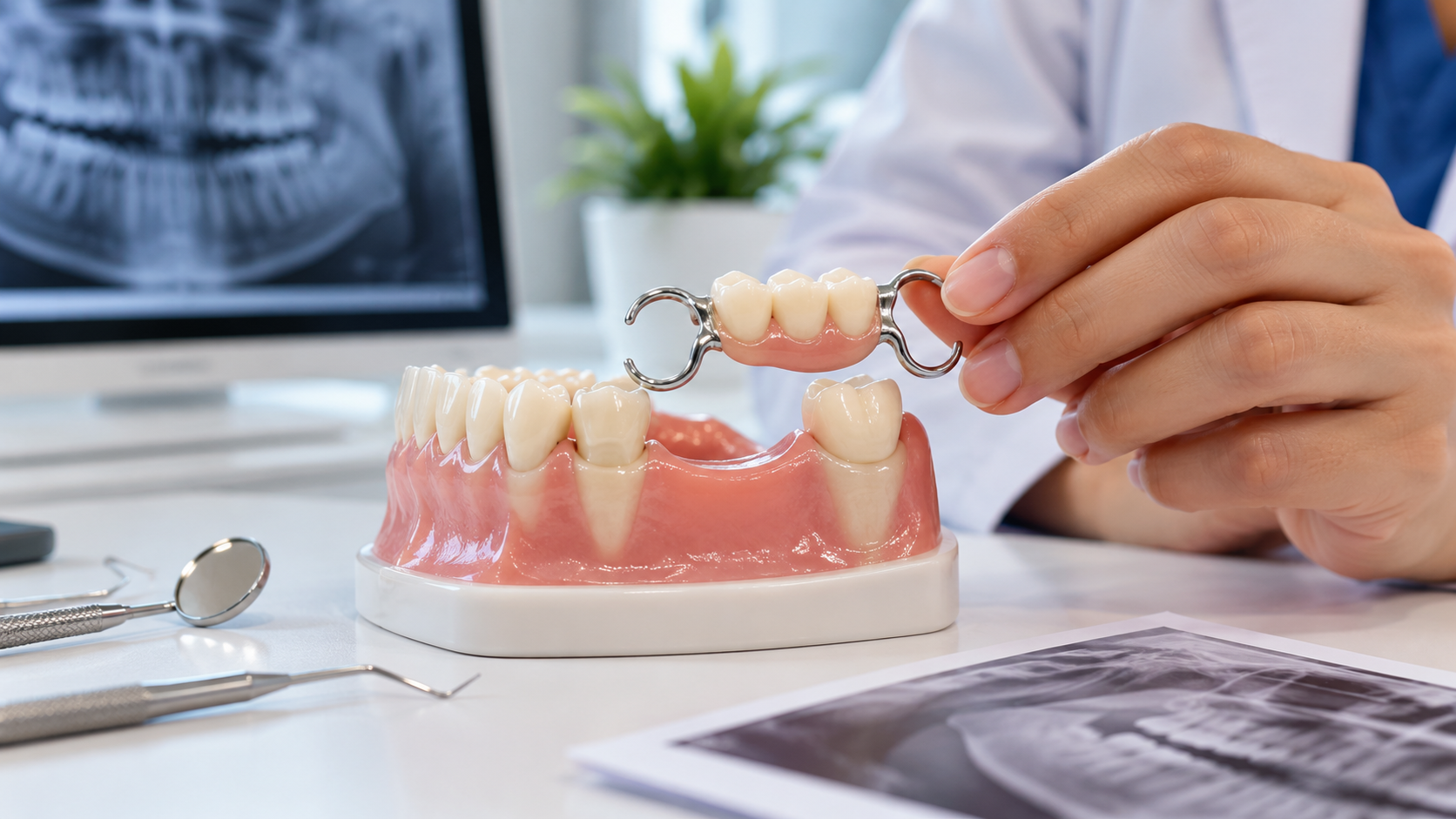
This guide explains FPD dental treatment in plain words. You will learn what an FPD is, its parts and types, how the work is done, what affects the cost, and how to care for it. You will also see how it compares with a removable partial denture (RPD) and a dental implant.
Quick Answer: What Is FPD Dental Treatment?
FPD dental treatment replaces one or more missing teeth with a fixed dental bridge. FPD stands for fixed partial denture. A false tooth, called a pontic, stays in place because crowns on the teeth beside the gap hold it there. Only a dentist can take it off. An RPD is different because you can remove it yourself.
The right choice depends on your gap, your nearby teeth, your gums, and your bone. A dentist needs to check your mouth to say what suits you. You can read about our fixed partial denture (FPD) service before you visit.
What Does FPD Mean in Dentistry?
FPD is the short form of fixed partial denture. Each word has a job.
- Fixed means it is cemented in place. You do not take it out to clean it.
- Partial means it replaces some teeth, not all of them.
- Denture means it is a set of false teeth.
Most people just call it a fixed dental bridge or a dental bridge. The words "fpd," "bridge," and "fixed prosthesis" often mean the same thing. If you see “fixed prosthodontics” on a dentist’s sign, that is the branch of dentistry that makes these.
The MouthHealthy page from the American Dental Association also uses the term "fixed partial denture" for a bridge. To see how crowns and bridges work together, read our page on dental crowns and bridges.
Parts of a Fixed Partial Denture
Every FPD dental bridge has the same basic parts. Think of a real bridge over a river.
- Abutment teeth: The natural teeth on each side of the gap. They hold the bridge up, like the banks of the river.
- Retainers: The crowns that fit over the abutment teeth.
- Pontic: The false tooth that fills the gap. There can be one or more.
- Connector: The part that connects the pontic to the retainers.
A bridge can be made of porcelain, metal, or a mix. Porcelain looks most like a natural tooth. Your dentist will suggest a material based on where the tooth is and how firmly you bite.
Types of FPD Dental Bridges
The right type of FPD dental bridge depends on which teeth are still in your mouth. Front and back teeth also need different designs.
- Front teeth (anterior FPD): Looks matter most here. The dentist matches the shape and shade of your other teeth so the bridge looks natural.
- Back teeth (posterior FPD): Strength matters most here. Back teeth take the biggest bite force, so the bridge must be sturdy.
Conventional Fixed Bridge
This type of bridge is the most common type, also called a fixed-fixed bridge. A conventional FPD dental bridge has a crown on each side of the gap and a pontic between them. Both ends are fixed to the abutment teeth. It is strong, but the dentist has to shave down the two abutment teeth to fit the crowns.
Cantilever Bridge
A cantilever bridge is held by teeth on only one side of the gap. It is used when there is no tooth on the other side. It puts more force on the supporting teeth, so dentists use it carefully and usually not at the back of the mouth, where the bite is strongest.
Resin-Bonded (Maryland) Bridge
This bridge has thin wings that are bonded to the backs of the nearby teeth. It requires less cutting of the natural teeth. It is often used for front teeth, but it may not hold up as well as a crowned bridge under heavy biting.
Implant-Supported Bridge
Instead of natural teeth, this bridge is held by dental implants. Implants are small posts placed in the jawbone. This option spares the nearby teeth from being cut, but it needs enough healthy bone and a surgery step. Read about our dental implants or the dental implant procedure, cost, and benefits in Lalitpur.
Who May Be Suitable for an FPD?
An FPD dental bridge can work well when:
- The teeth next to the gap are strong and healthy.
- Your gums are healthy, with no active gum disease.
- You are able to keep your mouth clean, including under the bridge.
- The gap is not too long.
An FPD may not be a good fit if the nearby teeth are weak or loose, if there is untreated decay or gum disease, or if the gap is very long. Your dentist may then suggest an implant or an RPD.
FPD vs RPD vs Dental Implant: Key Differences
- FPD (Fixed Partial Denture / Dental Bridge):
- Cannot be removed by the patient; only a dentist can remove it.
- Does not require surgery.
- Nearby teeth usually need to be trimmed to support a conventional bridge.
- Does not help preserve the jawbone.
- Requires special floss or cleaning tools to clean underneath the pontic.
- RPD (Removable Partial Denture):
- Can be removed and cleaned daily by the patient.
- Does not require surgery.
- May require minor changes to nearby teeth.
- Does not help preserve the jawbone.
- Needs to be removed regularly for proper cleaning.
- Dental Implant:
- Cannot be removed by the patient.
- Requires surgery to place the implant.
- Does not require cutting or trimming nearby healthy teeth.
- Helps preserve the jawbone by providing stimulation.
- Can be cleaned like a natural tooth.
Which Option Is Best?
- RPD: Often suitable when several teeth are missing or a fixed bridge is not possible.
- Dental Bridge (FPD): A good option for patients who want a fixed replacement without undergoing implant surgery. However, it depends on the condition of nearby teeth.
- Dental Implant: Often suitable for patients with sufficient healthy jawbone who want a fixed replacement without affecting nearby teeth.
What Happens Before FPD Treatment?
Good planning decides how long the bridge will last. Before FPD dental treatment begins, the dentist will look at:
- The abutment teeth: Are they strong, and are the roots long enough to carry the extra load?
- Your gums and bone: Healthy gums and enough bone support the teeth.
- Your bite: How your upper and lower teeth meet.
- Tooth angle: The abutment teeth should line up well enough for the bridge to slide on.
- X-rays and a scan: These show what is under the surface.
If a tooth has decay or an infection, it is treated first. That may mean a filling, gum treatment, or a root canal.
FPD Dental Procedure: Step by Step
Most FPD dental treatment takes two or more visits. The steps are usually like this.
- Check-up and plan. The dentist examines your mouth, takes X-rays, and explains your options.
- Tooth preparation. The abutment teeth are numbed and shaped so crowns can fit over them.
- Impressions or a scan. The dentist records the shape of your teeth. A lab makes the bridge from these impressions.
- Temporary bridge. A temporary one protects your teeth and covers the gap while you wait.
- Fitting. At the next visit, the temporary will be removed. The dentist checks the fit, shade, and bite, then cements the final bridge.
- Follow-up. A short check later makes sure the bite feels right and the gums are healthy.
The area is numbed, so most people feel pressure but not sharp pain. Mild soreness after the visit is common. Tell your dentist if it does not settle.
Benefits and Risks of a Fixed Dental Bridge
The main benefits of FPD dental treatment
- It fills the gap, so you can chew and speak more easily.
- It helps stop nearby teeth from drifting into the space.
- It looks like natural teeth when made well.
- It stays fixed, so there is nothing to remove at night.
- It usually takes less time than an implant, and it does not need surgery in the jaw.
The Cedars-Sinai guide to dental bridges also explains why filling a gap protects the bite and the teeth around it.
The main risks
- Cutting healthy teeth: For a conventional bridge, the dentist must shave down the abutment teeth. That enamel does not grow back.
- Higher risk of decay: Food and plaque can collect around the crowns and under the pontic. If the area is not cleaned well, decay or gum disease can start on the abutment teeth.
- Possible root canal: Shaping a tooth for a crown can irritate the nerve. In some cases, the tooth may later need root canal treatment.
- Bridge failure: If an abutment tooth fails, the whole bridge can be lost. Causes include decay, gum disease, a crack, or heavy biting force.
- Bone loss under the gap: When a tooth is missing, the jawbone under it slowly shrinks. A conventional bridge sits on top of the gum and does not stop this process. An implant does help keep the bone working.
FPD Dental Cost in Nepal
There is no single price, because no two mouths are the same. The FPD dental cost in Nepal depends on your teeth, the type of bridge, and the work needed first. We do not print a fixed rate here, because prices change, and a number from the internet cannot know your mouth. A check-up and a written quotation will always be more accurate.
Factors That Affect the Cost
- How many teeth are missing, and so how many pontics are needed.
- The material used, such as metal, porcelain fused to metal, or all-ceramic, also affects the price.
- The type of bridge is also important, as an implant-supported bridge usually costs more than a conventional one.
- Work needed first, like cleaning, fillings, gum treatment, or a root canal.
- The dental lab and the dentist’s experience are also important are also important.
Be careful with a very low price. A badly fitted bridge can lead to decay and may need to be redone.
What to Ask Before Accepting a Treatment Quote
Ask these questions of every clinic that quotes for FPD dental work.
- Which type of bridge do you suggest, and why?
- How many teeth will be shaped, and are the supporting teeth healthy enough?
- What material and which lab will be used?
- Does the quote include X-rays, the temporary bridge, and follow-up visits?
- Is any other treatment needed first, and is it priced separately?
- What happens if the bridge comes loose or fails?
- How long will the whole treatment take?
A clear, written quote that lists each step is easier to compare than one single number. You can book a consultation to get a quote that fits your mouth.
How to Care for a Fixed Dental Bridge
An FPD dental bridge can last many years with proper care. Many bridges last ten years or more, but the exact lifespan varies from person to person. Care after treatment is called the maintenance phase, and it matters as much as the treatment itself.
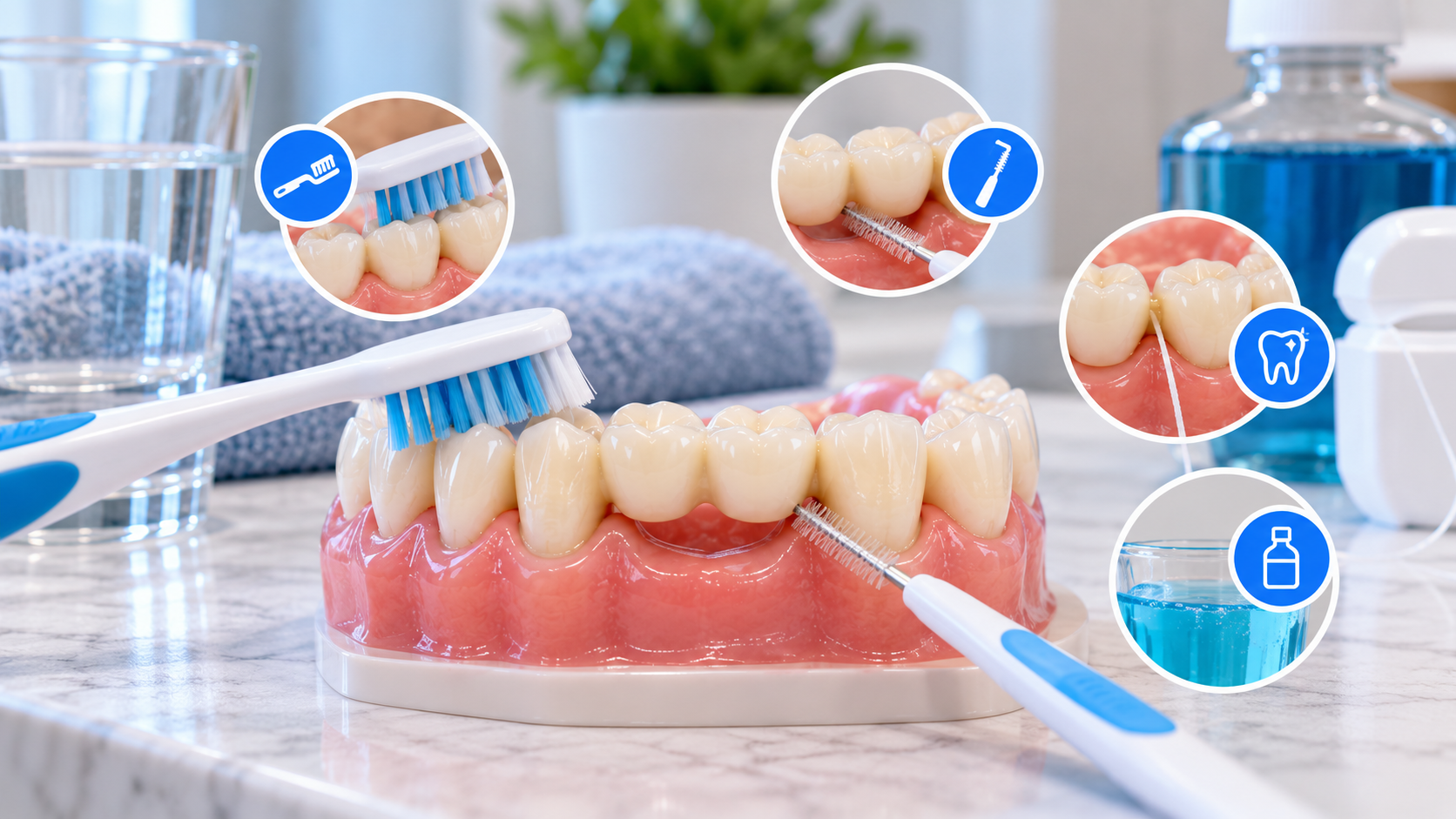
- Brush twice a day with a soft brush and fluoride toothpaste.
- Clean under the pontic every day. Use a floss threader, super floss, or a small interdental brush.
- See your dentist for check-ups and cleaning at least twice a year.
- Cut down on sugary snacks and drinks.
- Do not bite ice, tough sweets, or pen caps.
- If you grind your teeth at night, ask about a night guard. It protects the bridge.
- Bleeding or swollen gums near the bridge are a sign to book a visit.
- If the bridge feels loose, do not wait. A loose crown lets decay in under the bridge.
If you have a broken bridge, pain, or swelling, call us the same day. We handle emergency dental care too.
Frequently Asked Questions About FPD Dental Treatment
What does FPD mean in dental terms?
FPD stands for fixed partial denture. It is a fixed bridge that replaces one or more missing teeth and is cemented onto the teeth or implants beside the gap.
What is the difference between FPD and RPD?
An FPD is cemented in place, and only a dentist can remove it. An RPD, or removable partial denture, is a set of false teeth that you take out to clean and to sleep.
How many types of FPD are there?
The main types are the conventional fixed-fixed bridge, the cantilever bridge, the resin-bonded bridge, and the implant-supported bridge. Your dentist picks the one that suits your gap and your nearby teeth.
Is the FPD procedure painful?
The teeth are numbed during treatment, so you should not feel sharp pain. Some soreness or sensitivity for a few days afterwards is common. Tell your dentist if it gets worse.
How long does an FPD last?
Many bridges last ten years or more with thorough cleaning and regular check-ups. Some need replacing sooner, especially if decay or gum disease develops around the supporting teeth.
How much does FPD dental treatment cost in Nepal?
The cost depends on the number of missing teeth, the material, the type of bridge, and any work needed first. A dentist can give you a clear figure after checking your mouth and taking X-rays.
Is an FPD or a dental implant better?
Neither is better for everyone. An implant does not cut nearby teeth and helps keep the jawbone, but it needs surgery and enough bone. A bridge is faster and avoids jaw surgery. Your dentist will explain what fits your mouth and budget.
Can an FPD be made for front teeth?
Yes. Bridges for front teeth are made to match the shape and color of your natural teeth. Front teeth carry less bite force than back teeth, so lighter designs are sometimes possible.
How do I clean under a fixed bridge?
Pass a floss threader, super floss, or a small interdental brush under the false tooth once a day. Brush the area where the crowns meet the gums. Your dentist can show you the right way at a check-up.
FPD Dental Treatment at Dynamic Dental Clinic in Lalitpur
Dynamic Dental Clinic is a dental clinic in Kumaripati, Lalitpur, Nepal. Dr Ujjwal Pyakurel and our team see patients for fixed partial dentures, removable partial dentures, dental crowns and bridges, and dental implants, along with orthodontics, clear aligners, teeth cleaning, and emergency care.
If you live in Lalitpur, Kathmandu, or nearby and you are weighing a fixed bridge against an implant or a removable denture, come in, and we will take a look. Our team will check your mouth, take X-rays and a scan if needed, and explain what each choice would mean for you, in plain words. You can see everything we offer on our services page.
Book Your Consultation at Dynamic Dental Clinic
Still unsure about an FPD dental bridge, a removable denture, or an implant? Let our team look at your teeth and explain which option suits you, your budget, and your timeline. No pressure, just clear answers. You can book an appointment online.
Dynamic Dental Clinic
Kumaripati, Lalitpur, Nepal
Call: 984-0354608
Address: Beside Yamaha Showroom, Kumaripati, Lalitpur 44700, Bagmati Province
Opening hours: Every day, 10:00 AM - 6:00 PM
Dental pain, swelling, or a loose crown? Call us the same day. We handle emergency care too.
Conclusion
A missing tooth is easy to ignore, but the gap does not stay quiet. Nearby teeth move and chewing changes. FPD treatment in Nepal is one of the oldest and most trusted ways to fill that gap, as long as the supporting teeth are healthy. The best next step is a check-up, so a dentist can tell you whether FPD dental work, an RPD, or an implant is right for you.